


Internal parasitic infections are common in children and adults.This condition is more common in children, since they are less observant of hygiene rules and most parasites are transmitted through the fecal-oral route.
Because there are so many types of infections, their symptoms vary widely, and some are completely asymptomatic.Therefore, diagnosing internal parasites sometimes requires extensive research to make a diagnosis.
Diagnostic Basics
In order to identify a parasitic infection, it is usually necessary to consult a doctor.Because this lesion usually doesn't cause much trouble in adults and children, and the symptoms are nonspecific, patients often don't realize they are infected until they find worms in their stool.Diagnosis is usually incidental if infection with extraintestinal parasites (eg, Giardia, amoeba) is not passed in the feces.
But even if parasites are detected in the stool, patients need to consult a doctor and get tested for parasites.This is done not only to accurately identify the parasites, but also to determine what type they are.
This is necessary in order to prescribe the most effective and least toxic drug to treat the infection elsewhere in the body.Some drugs only work on certain types of pathogens.Unlike broad-spectrum drugs, they do not have such significant negative effects on the body.
Therefore, it is recommended to prescribe it after accurate identification of the invading pathogen (for this you need a parasite test in adults or children).In addition, the specialist can draw certain conclusions when collecting a medical history and identifying characteristic symptoms during a conversation with the patient.However, it is difficult to make an accurate diagnosis this way (especially in adults, where symptoms are least severe).
Therefore, doctors recommend a blood test for parasites.Sometimes stool analysis is enough.Your doctor will tell you where to get tested for this indicator.This can be done at a municipal or commercial clinic, or directly in a laboratory.
There are also some peculiarities in the sampling method, which experts will inform you about.The cost of infection testing depends on where the test is performed and the type of sample required for diagnosis.
stool analysis
When it comes to what parasite tests are needed, the first thing most patients think of is a fecal parasite test.This diagnosis of the presence of worms is indeed first prescribed by a doctor.
This is a simple study that can be performed in any qualified medical institution and laboratory.Detecting parasites in this way is the simplest and non-invasive.This is especially important when collecting samples from children.No need to go to the lab to draw blood.
Patients self-test their stool for parasites.No special preparation is required.Immediately after defecation, a small portion of the feces must be placed into a sterile tube and taken to the laboratory.
There is only one special condition - the shortest possible time should pass between defecation and sample collection and transportation of the material to the laboratory.Additionally, detection of such worms should be done in the morning.
This method is not universal.It helps identify only those worms and parasites living in the large intestine.It is not suitable for identifying parasites located in other organs, such as the liver, as well as worms found primarily in the small intestine (pinworms), because these parasite types with specific life cycles do not enter the large intestine and do not leave the body in the feces.
However, many types of opportunistic extraintestinal invasion, such as liver lesions, still occur in the feces.They only exist in smaller quantities.Your doctor will tell you which test is appropriate for your specific situation, based on your symptoms.In fact, on this basis we can draw conclusions about which parasites should be considered first for the possibility of their presence.
Gua Sha
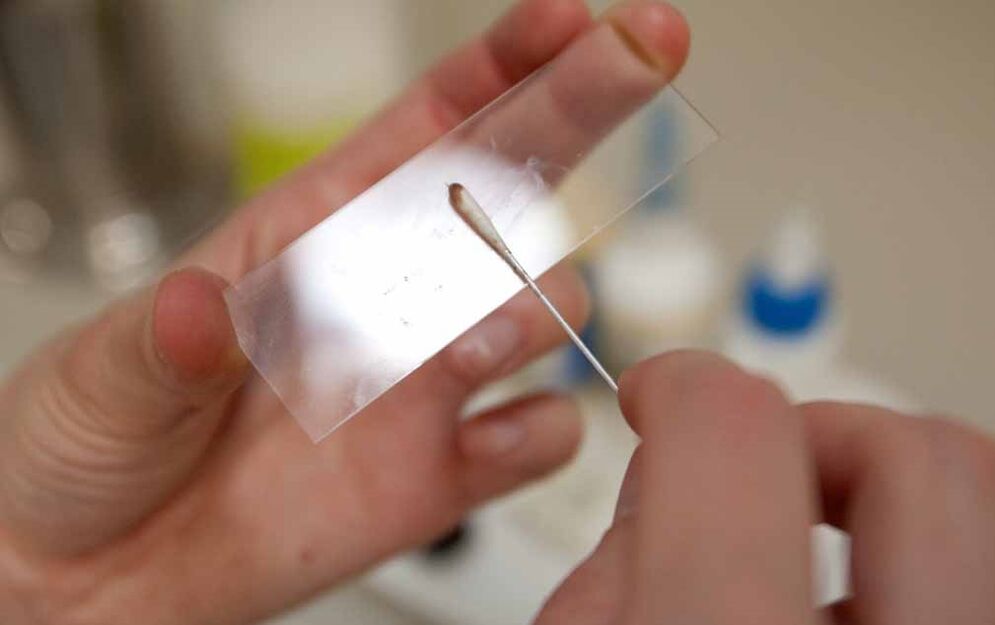
Another way to check for parasites yourself at home.This method is suitable for determining the presence of those types of parasites that come to the surface through the anus to lay eggs.
The most common pinworms have this characteristic.To perform this type of test, a scraping from the anus is required to test for parasites.
This requires a specialized pinworm test kit.Some patients use tape to scrape, but this method is not very effective.
The basic rules for sampling are as follows:
- It is done in the morning, immediately after a person wakes up;
- You should not shower before conducting the study;
- It is recommended not to touch the anus before collecting the sample;
- Before you take your parasite test to the lab, you will need to store it in the refrigerator;
- There should be no more than 6-8 hours between collection time and transfer study time.
Use a pinworm test kit to diagnose parasites in the human body as follows:
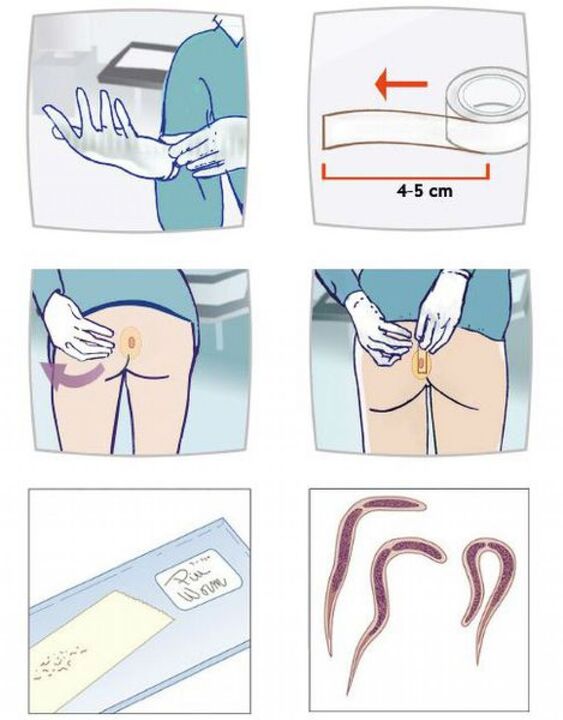
- Remove the clear polyacrylic spatula from the kit;
- Apply a little adhesive to its edges, which is also included in the kit;
- Place the spatula on the skin of the anal folds several times;
- Place the spatula into a sterile container, also included in the kit.
Bring the container with the spatula to the laboratory.It is not difficult to find a place for parasite testing in Moscow.You can visit the laboratory.
In small towns, a referral from a parasitologist or infectious disease specialist is often required to submit materials to a clinic laboratory.
General blood tests
Sometimes, routine blood tests for parasites are necessary in children and adults.It can indirectly confirm the presence of an intrusion.If he confirms this, an expensive and accurate blood test for parasite antibodies could be done.UAC is cheap.
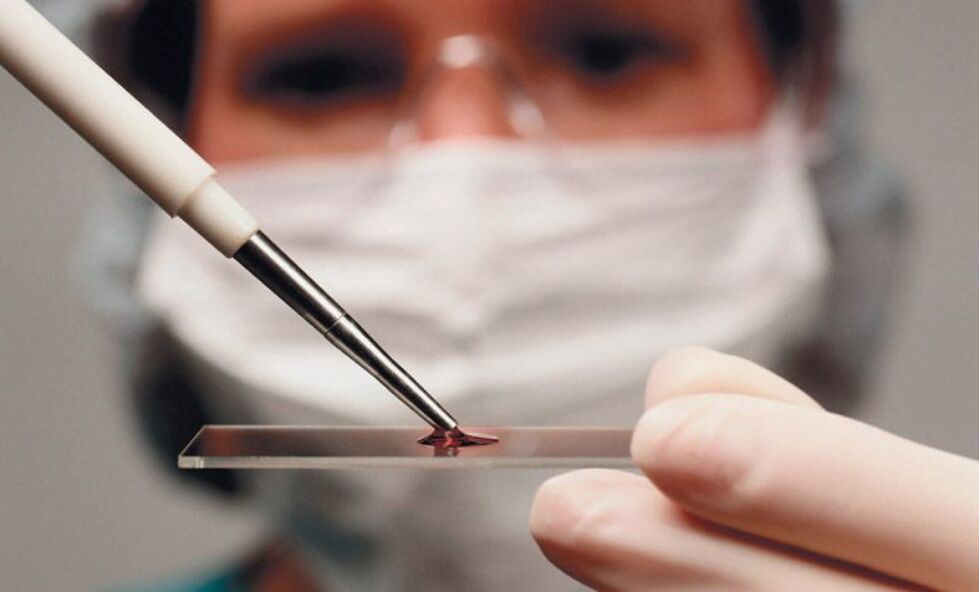
For this type of study, you need to donate blood from your finger as it is done using a capillary sample.It is taken from the finger; babies may have other collection sites - earlobes, heels, thighs.
You need to do a fasting test.Such research helps determine the following:
- Increased eosinophil content and an increase in eosinophils indicate an allergic reaction to parasites in the body;
- Elevated levels of white blood cells indicate that the immune system is vigorously fighting something, possibly a parasite (however, these indicators are also caused by viruses, infections, and inflammatory processes);
- During the invasion process, the iron content decreases, since the parasites in the body do not allow useful substances to be absorbed into the blood in sufficient quantities, and also cause continuous microhemorrhages, since they damage the mucous membrane to obtain nutrients.
Blood chemistry tests are also sometimes recommended.Taking samples from veins can help determine if internal organs are functioning properly.Based on its results, it is indirectly clear which organ may be affected by the invasion, but it is rarely prescribed.The doctor decodes it.
Enzyme-linked immunoassay

The ELISA parasite blood test is the most expensive and most accurate test.This is the name of the analysis that indicates the presence of specific antibodies in the body that the immune system begins producing in response to an invasion.
An enzyme immune blood test for parasites is great because it allows you to determine the type of parasite very accurately, right down to its strain.Antibodies are specific immunoglobulins that are specific not only to different pathogens but also to different strains.Therefore, this kind of research into the presence of parasites in the body can not only make an accurate diagnosis, but also prescribe more "targeted" treatments.
This parasite serology blood test is performed using a venous sample.You can take it in the morning as it is important to take it on an empty stomach.This analysis, used to identify parasites, takes anywhere from a few hours to a few days.Patients receive detailed results from the laboratory indicating the types of immunoglobulins (if any) and their amounts.
Interpreting blood tests for parasites is simple.When an infection occurs, antibodies are present in large quantities.The body develops immunity to certain types of invasion; in this case, the presence of small amounts of immunoglobulin in the blood may indicate that the patient was previously infected but has since recovered.The absence of antibodies indicates that there is no infection, or that the infection was recent and antibodies have not had time to develop.
You can donate blood to parasites yourself in this way, but due to the high cost, it is best to consult a doctor first.Therefore, sometimes it does not make sense to donate blood to people with immunodeficiency diseases, HIV, and lupus to detect the presence of parasites using the ELISA method.